

10 Evidences That Strengthen the Case for the Bible #3
Evidence #3 — The Preservation of the Biblical Text Over Time
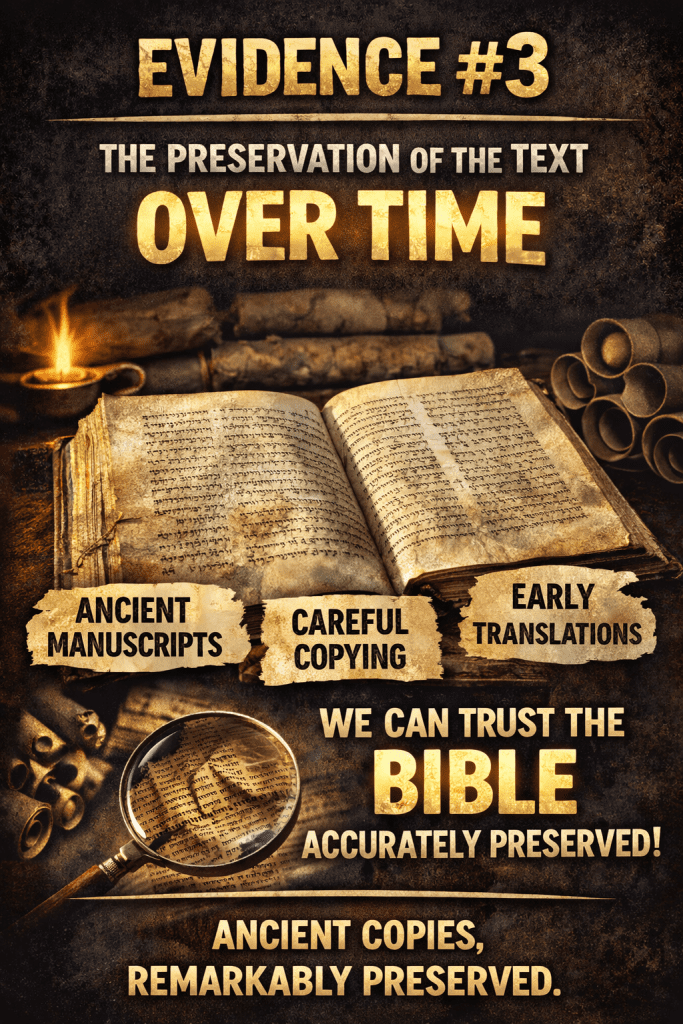
One of the most common criticisms of the Bible is the claim that it has been changed so many times over the centuries that no one can know what it originally said. It is often repeated that the Bible has been copied, translated, and edited so many times that the original message must have been lost.
But when the historical evidence is examined, the opposite turns out to be true.
The biblical text has been preserved with remarkable accuracy.
Before the printing press existed, every document had to be copied by hand. This was true for every ancient book, not just the Bible. What makes the biblical manuscripts unique is the extraordinary care that scribes used when copying the text.
Jewish scribes who copied the Old Testament developed meticulous systems to preserve accuracy. They counted letters, words, and lines to ensure that each copy matched the original as closely as possible. If a copy contained an error, the manuscript could be rejected rather than passed along.
This careful approach helped preserve the Old Testament text for centuries.
In the twentieth century, one of the most important discoveries confirming this preservation was the discovery of the Dead Sea Scrolls. These ancient manuscripts, some dating back more than two thousand years, contained portions of the Old Testament that could be compared with later copies.
When scholars examined the texts, they found that the message had been preserved with remarkable consistency across centuries of transmission.
The New Testament shows similar evidence of preservation. Early Christians widely copied and circulated the writings of the apostles because these texts were used for teaching, worship, and instruction in the growing church. Because these writings spread across many regions, no single group controlled the text.
This widespread distribution helped safeguard the content of the message.
Instead of a single fragile line of copies, the New Testament exists in a vast network of manuscripts that scholars can compare. Differences between copies are usually minor spelling variations or small grammatical differences that do not affect the meaning of the text.
The overall message remains clear and consistent.
Rather than losing the original message over time, the evidence shows that the biblical text has been preserved with extraordinary care. The more manuscripts that have been discovered and compared, the more confidence scholars have in the accuracy of the text that we read today.
The preservation of Scripture across centuries is not an accident. It reflects the careful work of those who copied it and the widespread distribution that protected it from corruption.
Tomorrow we will explore the fourth evidence: the rapid growth of the early church despite intense persecution.
Discover more from Scott A Marshall
Subscribe to get the latest posts sent to your email.
