

The Real Crisis is the Absence of God’s People
I recently heard a statement that really resonated with me because it made sense immediately.
Society’s problem isn’t the presence of growing evil, but the growing absence of God’s people.
At first glance, that may sound like an oversimplification. Turn on the news and it certainly feels like evil is increasing—more violence, more division, more corruption, more confusion. But when you step back and look through the lens of Scripture, a different picture begins to emerge.
Evil itself isn’t new. It never needed permission to exist, and it never needed help to spread. Genesis shows us that sin entered early and multiplied quickly, and Scripture never presents evil as something that suddenly appears when God steps away. What changes throughout history isn’t the existence of darkness, but the resistance to it.
What’s missing today isn’t wickedness. What’s missing is faithful presence.
Darkness Doesn’t Need to Grow When Light Withdraws
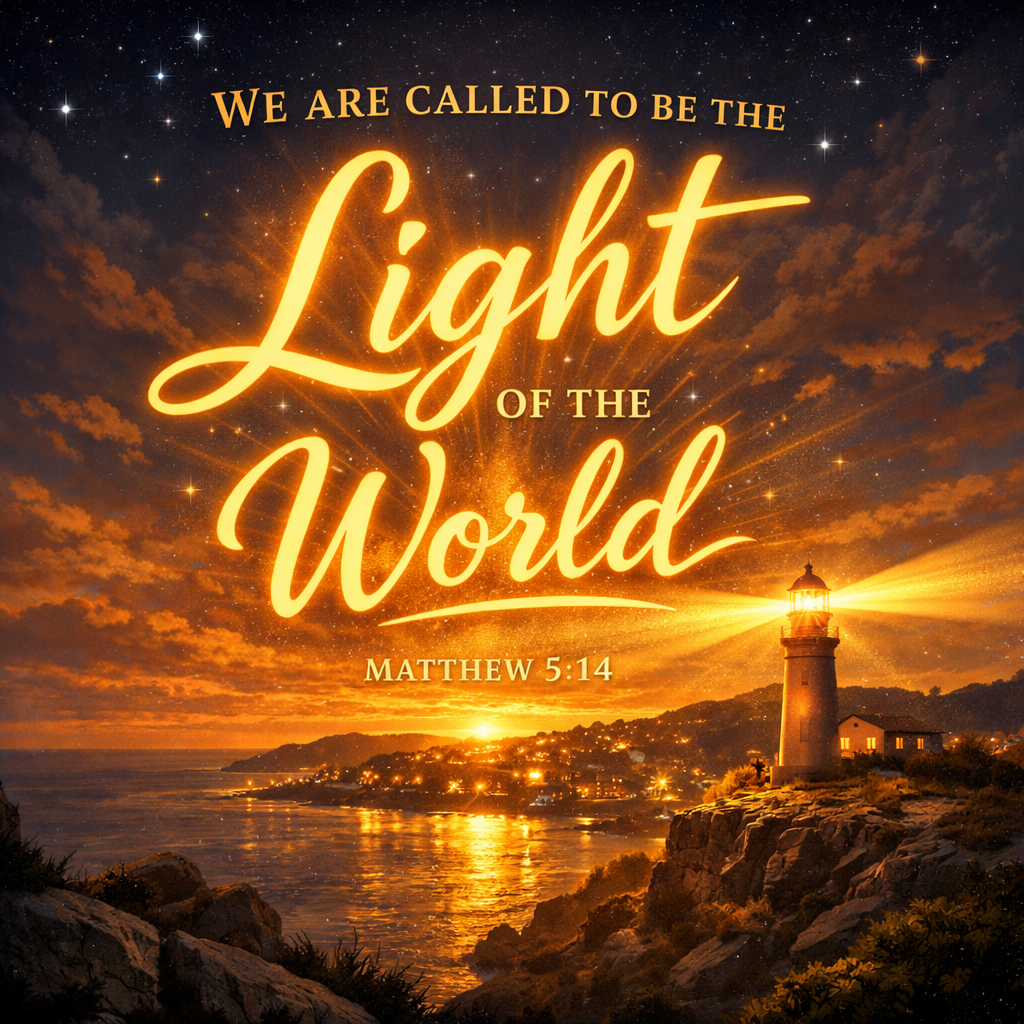
Jesus addresses this directly in Matthew 5 when He tells His followers that they are the salt of the earth and the light of the world. Salt preserves. Light reveals. Neither one works by force or volume—both work by presence.
Salt doesn’t stop decay by arguing with rot. It slows decay simply by being there. Light doesn’t negotiate with darkness; it dispels it by existing. When salt is removed, decay accelerates. When light is hidden, darkness fills the room—not because darkness suddenly became more powerful, but because restraint was removed.
This is why Jesus warns that salt can lose its effectiveness and light can be hidden. The danger isn’t hostile opposition from the outside; it’s quiet withdrawal from the inside.
Scripture’s Pattern Is Clear—and Uncomfortable
When judgment unfolds in Scripture, it rarely begins with the pagan world. Peter makes this explicit in 1 Peter 4:17 when he says judgment begins with the household of God. That pattern runs throughout the Old Testament.
Israel’s collapses didn’t come because surrounding nations were unusually evil. Those nations were always evil. Israel fell when it stopped living distinctly—when it blended in, absorbed the culture’s values, and treated obedience as optional.
The prophets weren’t sent first to foreign kings. They were sent to God’s people. Over and over, God’s message was the same: you were called to be set apart, and instead you disappeared into the crowd.
The Church’s Greatest Threat Isn’t Persecution — It’s Withdrawal
Jesus never promised comfort. In John 16:33 He makes it clear that trouble in the world is a given. What He does promise is His presence and victory. History confirms that persecution has never destroyed the church—it has often purified it.
What weakens the church is comfort without conviction, belief without obedience, and faith that exists privately but refuses to be lived publicly. James addresses this tension when he warns that faith without works is dead. A hidden faith may feel safe, but Scripture never calls it faithful.
When believers retreat into silence, avoid uncomfortable truth, or reduce faith to a weekly routine, society does not remain neutral. Paul explains in Romans 1 that when truth is suppressed, something else fills the vacuum—and it never leads upward.
Faithful Presence Is Costly — and Necessary
The early church understood this. Acts shows believers living openly different lives in the middle of pressure, hostility, and confusion. They didn’t win the Roman Empire through power or popularity. They lived visibly transformed lives and refused to deny Christ, even when it cost them reputation, freedom, or life itself.
They were present in homes, marketplaces, prisons, families, and communities. They spoke truth with love, lived with conviction, and did not disappear when obedience became inconvenient. Jesus said in John 15 that the world would resist this kind of faithfulness—but He never suggested retreat as an option.
The Question Isn’t “How Dark Is the World?”
The better question is this:
Where are God’s people?
Are we present in our homes with spiritual leadership, as Deuteronomy 6 describes?
Present in our workplaces with integrity, as Paul instructs in Colossians 3?
Present in our communities with clarity and compassion, as Jesus models throughout the Gospels?
Present in conversation when truth is uncomfortable?
Present when silence feels safer?
Darkness has never needed help to exist. Light, however, must be chosen.
The Answer Has Always Been the Same
Scripture doesn’t tell us to panic about darkness. Jesus says in Matthew 28 that we are sent, not sheltered. We are commissioned, not concealed.
When God’s people live distinctly, darkness loses its power to define the culture. When God’s people hide, darkness fills the space without resistance.
The problem isn’t that evil is louder than it used to be. The problem is that too many lights have been dimmed, covered, or unplugged.
And the solution isn’t complicated—but it is demanding. Be present. Be faithful. Be obedient. Be unashamed.
Not because the world deserves it—
but because God called His people to be salt and light until the end.
And that calling, according to Jesus’ own words, has never been revoked.
Discover more from Scott A Marshall
Subscribe to get the latest posts sent to your email.
