

10 Evidences That Strengthen the Case for the Bible #4
Evidence #4 — The Rapid Growth of the Early Church Despite Persecution
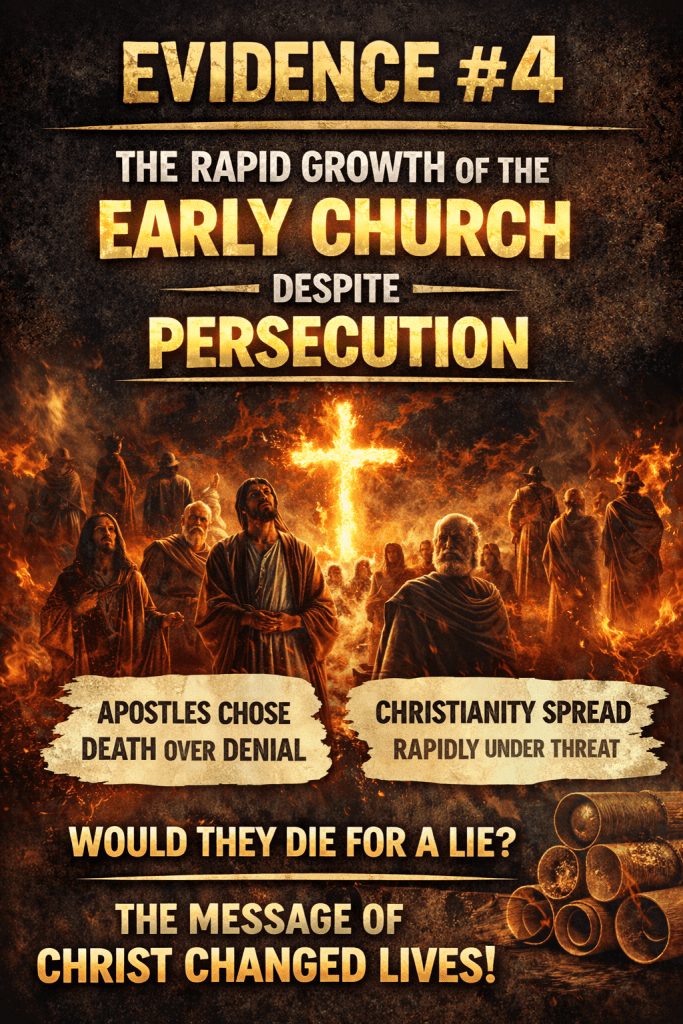
One of the most striking historical realities surrounding Christianity is how quickly it spread in its earliest years. The message about Jesus began with a small group of followers in a remote corner of the Roman Empire. They had no political power, no military strength, and no social influence.
Yet within a few generations, the message of Jesus had spread across the Roman world.
This growth becomes even more remarkable when we consider the environment in which it occurred. Early Christians were not welcomed by the authorities of their day. In many places they were viewed with suspicion, hostility, and sometimes violent persecution.
Christians were imprisoned, beaten, and even executed for refusing to deny their faith. Public gatherings could bring attention from authorities, and associating with the Christian movement carried real risk.
Movements built on falsehood or deception tend to collapse when pressure and danger appear. People may be willing to support an idea when it is popular or beneficial, but very few are willing to suffer for something they know is a lie.
Yet the early Christian movement did not collapse under persecution. Instead, it continued to grow.
Men and women across different cities and cultures embraced the message that Jesus had risen from the dead and that salvation was available through Him. Churches formed throughout the Roman Empire despite the fact that joining such a community could bring serious consequences.
Historians have long recognized this rapid expansion as one of the most significant developments in the ancient world. Within a few centuries, the message that began with a small group of followers had spread throughout the empire and beyond.
This raises an important question.
What would cause ordinary people to embrace a message so strongly that they were willing to endure persecution rather than abandon it?
The early Christians believed they were responding to something real. They were convinced that the events surrounding the life, death, and resurrection of Jesus had truly happened and that this message was worth proclaiming regardless of the cost.
Their willingness to endure hardship did not create the truth of the message, but it strongly suggests that they believed it deeply enough to stake their lives on it.
The rapid growth of the early church, even in the face of persecution, remains one of the most compelling historical realities connected to the message of the Bible.
Tomorrow we will look at the fifth evidence: the eyewitness testimony of the apostles.
Discover more from Scott A Marshall
Subscribe to get the latest posts sent to your email.
