

10 Evidences That Strengthen the Case for the Bible #8
Evidence #8 — Fulfilled Prophecy
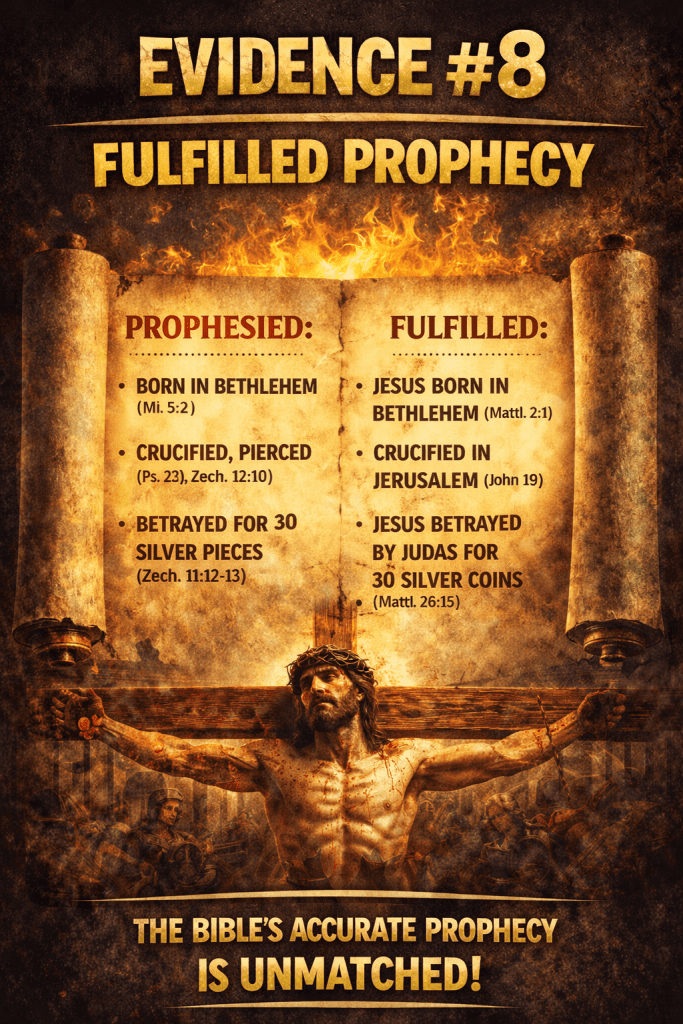
One of the most unique features of the Bible is its record of prophecy. Throughout Scripture, we find statements about future events written long before those events occurred. These are not vague predictions that could apply to many situations, but often specific declarations about people, nations, and historical developments.
Prophecy is significant because it points to knowledge beyond ordinary human ability. No person can reliably predict future events centuries in advance. Yet the Bible contains many prophecies that later came to pass in history.
One of the most discussed areas of prophecy involves the coming of the Messiah. Long before the time of Jesus, the Old Testament described details about the future Savior. These writings spoke about where He would be born, the nature of His mission, the rejection He would face, and the suffering He would endure.
When the life of Jesus is examined alongside these earlier writings, many of these details appear to align in remarkable ways.
For example, the Old Testament describes a ruler who would come from Bethlehem. It also describes a servant who would suffer on behalf of others and bear the consequences of human wrongdoing. These descriptions were written centuries before the events recorded in the New Testament.
Beyond the life of Jesus, the Bible also includes prophecies about the rise and fall of nations, the exile and restoration of Israel, and many other historical developments that later occurred.
The significance of fulfilled prophecy is that it suggests the message of the Bible was not merely written from human perspective alone. When predictions recorded long in advance later align with historical events, it points to the possibility that the message came from a source that sees beyond the limits of human time.
For believers, fulfilled prophecy is one of the ways Scripture demonstrates that it is not simply a collection of human writings. Instead, it presents itself as a message that unfolds through history with purpose and direction.
Tomorrow we will explore the ninth evidence: archaeological discoveries that support the historical setting of the Bible.
Discover more from Scott A Marshall
Subscribe to get the latest posts sent to your email.
