

“I’m Saved.” But What Do We Mean When We Say That?
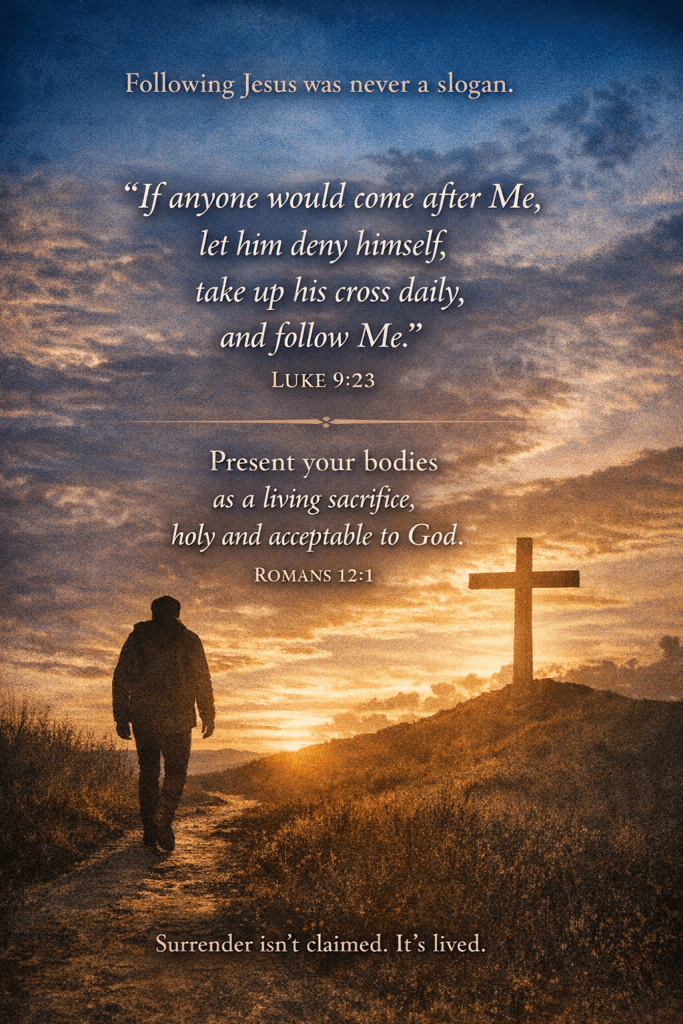
I was having a conversation recently, and it struck me how shallow the statement “I’m saved” can actually be—not because salvation is shallow, but because the way we use the phrase often is.
Most people say it quickly and confidently. There’s no hesitation, no reflection, no follow-up. It’s treated like a settled fact, something filed away in the past. But the more I thought about it, the more I realized that many people answering that question have never really considered what they’re claiming.
The truth is, no living person has perfect knowledge of their own heart. Scripture is clear that God alone sees fully and judges rightly. We can examine ourselves, we can bear fruit, we can have assurance—but certainty belongs to God.
That doesn’t mean the question is wrong. It means the way we ask it may be incomplete.
Because when salvation is real, it doesn’t just settle your eternity—it changes your authority. Something shifts. Someone else takes ownership.
That’s why a far more revealing question might be:
Are you surrendered?
Surrender isn’t a feeling. It’s not a statement of intent. It’s not something you claim—it’s something that shows up in real life. Surrender means that Jesus doesn’t just forgive you; He governs you. He doesn’t just rescue you; He directs you.
And that leads to an even harder question, one most people have never been asked:
What have you actually surrendered?
Not in theory or in language. In practice.
Because surrender that never touches real behavior isn’t surrender at all.
So let’s get personal.
Not vague or abstract but personal.
You say you are surrendered—but have you surrendered your mouth?
Gossip. Sarcasm. Half-truths. Passive-aggressive comments. “Just being honest.”
Do you speak in ways that tear down others while excusing yourself?
Do you repeat things you wouldn’t say if the person were standing there?
Surrender here means your words are no longer yours to use carelessly.
You say you are surrendered—but have you surrendered sexual sin?
Have you surrendered sex outside of marriage, or do you excuse it because “everyone does it” or because it feels natural?
Have you surrendered pornography, or do you manage it quietly and call it a struggle instead of a sin?
Have you surrendered lust, or do you justify what you look at, think about, or joke about?
Surrender here doesn’t mean temptation disappears. It means you no longer defend what God has clearly spoken against.
You say you are surrendered—but have you surrendered drunkenness?
Not just obvious addiction—but casual intoxication that dulls self-control and conviction.
Do you stop when God says stop, or only when your body forces you to?
Have you surrendered the desire to escape, numb, or loosen restraint, or do you still use substances as a refuge?
Surrender shows up when pleasure no longer outranks obedience.
You say you are surrendered—but have you surrendered drugs?
Whether illegal or prescribed and misused, have you placed your mind and body under God’s authority?
Do substances control your mood, your motivation, or your peace more than the Spirit does?
Surrender means you no longer get to decide what controls you.
You say you are surrendered—but have you surrendered pride?
Pride hides well in church.
It shows up as self-reliance, defensiveness, refusal to be corrected, and the need to always be right.
Can you be confronted without becoming combative?
Can God expose something in you without you explaining it away?
Surrender means you stop protecting your image and start protecting your obedience.
You say you are surrendered—but have you surrendered your anger?
Not just explosive anger—but bitterness, resentment, grudges, and quiet hostility.
Do you hold onto offenses because they feel justified?
Do you replay wrongs instead of releasing them?
Surrender means you no longer get to keep anger as a companion.
You say you are surrendered—but have you surrendered your time?
Does God shape your schedule, or does He get what’s left?
Is Scripture optional but entertainment non-negotiable?
Is prayer something you intend to do, or something you actually do?
Surrender shows up in how life is ordered, not just what is believed.
You say you are surrendered—but have you surrendered control?
Do you obey even when it costs you something?
Do you trust God when the outcome is uncertain?
Or do you comply only when obedience aligns with comfort?
Surrender means you follow even when you don’t like the direction.
You say you are surrendered—but have you surrendered your identity?
Are you willing to be defined by Christ more than by politics, culture, career, or past wounds?
Do you belong to Him more than to a tribe or label?
Surrender means your primary allegiance is settled.
Why this matters
None of these things earn salvation. But all of them reveal who is in charge.
Surrender is not about being flawless. It’s about direction. It’s about repentance that doesn’t just feel bad, but turns around. It’s about conviction that leads to change, not explanation.
And this is where the question “Are you saved?” becomes too small.
Because the real question is not whether someone once reached for Christ.
The real question is whether Christ now holds them.
And the only honest way to answer that isn’t with a quick yes—but with a careful look at what has been laid down, what is being fought, and who ultimately owns the life.
Why this matters more than people want to admit
This isn’t important because I like heavy questions. It’s important because life is not guaranteed, and death is not rare. We see it constantly—car wrecks, overdoses, heart attacks, cancer, strokes, shootings, suicides, accidents that happen in a blink. You don’t have to go looking for it. Death shows up in your news feed, in your community, in your family tree, and sometimes in your own living room.
Most people live like they’ll get around to God later. Later when life slows down. Later when they get past this season. Later when they’re older. Later when they’re done “living a little.”
But later isn’t promised.
And the part that should sober us is this: there are people who died today who would give anything for one more hour to get honest with God. One more moment to repent without pretending. One more chance to stop playing games and actually surrender. They don’t have it. Their window is closed. Their “someday” is gone.
That’s not drama. That’s reality.
We live in an advanced society compared to 2,000 years ago. We have technology, medicine, convenience, and comfort that would have been unimaginable then. We can FaceTime across the planet, order food to our door, and get test results in an app. But none of that changes the most basic truth about being human.
You still have a soul.
You still die.
And what happens next is not determined by how modern your life was.
People talk like the world has changed so much that spiritual reality must have changed too. As if because we have smartphones, we’ve upgraded what happens after death. As if the passage of time altered the authority of God.
But we changed. God didn’t.
The same God who existed before any nation existed is still on the throne. The same God who judged sin then still calls sin what it is now. The same Christ who called people to follow Him with their whole lives is not impressed with modern excuses. The same gospel that saved people in the first century is still the only gospel that saves.
Nothing about human progress makes eternity less real.
If anything, it’s made us more distracted. We’re more entertained, more busy, more medicated, more connected, and at the same time more numb. We’ve gotten really good at drowning out the voice of conviction.
That’s why “I’m saved” can become such a dangerous statement when it’s used shallowly.
Because if a person believes they’re secure while still living in open rebellion, they don’t seek mercy—they seek reassurance. They don’t repent—they defend. They don’t surrender—they negotiate. And the longer they do that, the more comfortable it becomes.
And then one day they die.
And if they were wrong, they don’t get to correct it.
This is why the surrender question matters. It forces a person to stop hiding behind the comfort of Christian vocabulary and come face-to-face with what they’re actually doing with their life. It forces them to consider whether they’ve been converted—or merely convinced.
There’s a reason Scripture tells people to examine themselves. Not because God wants you living in anxiety, but because God does not offer false peace. False peace is deadly.
So the point of these questions isn’t to make genuine believers doubt everything.
The point is to shake people who have replaced surrender with a religious claim.
Because there is a kind of confidence that comes from faith—and there is a kind of confidence that comes from presumption. One produces humility and obedience. The other produces excuses and delay.
And delay is the most dangerous spiritual habit there is, because delay assumes you’ll still be here tomorrow.
You might not be.
So if you say you’re surrendered, don’t just let that be a comforting phrase. Bring it into the light. Put weight on it. Ask what it has actually cost you.
Not because salvation is earned by surrender, but because real salvation produces it.
And if the only evidence you can point to is a moment you remember, but there’s no present-day bowing of the will, no hatred of sin, no turning, no fight, no change of direction—then the most loving thing you can do is stop saying “I’m fine” and start getting honest.
Because the real tragedy isn’t that people struggle.
The tragedy is that people die believing they surrendered when they never did.
Discover more from Scott A Marshall
Subscribe to get the latest posts sent to your email.
