

Let’s Be Honest—This Didn’t Just Happen
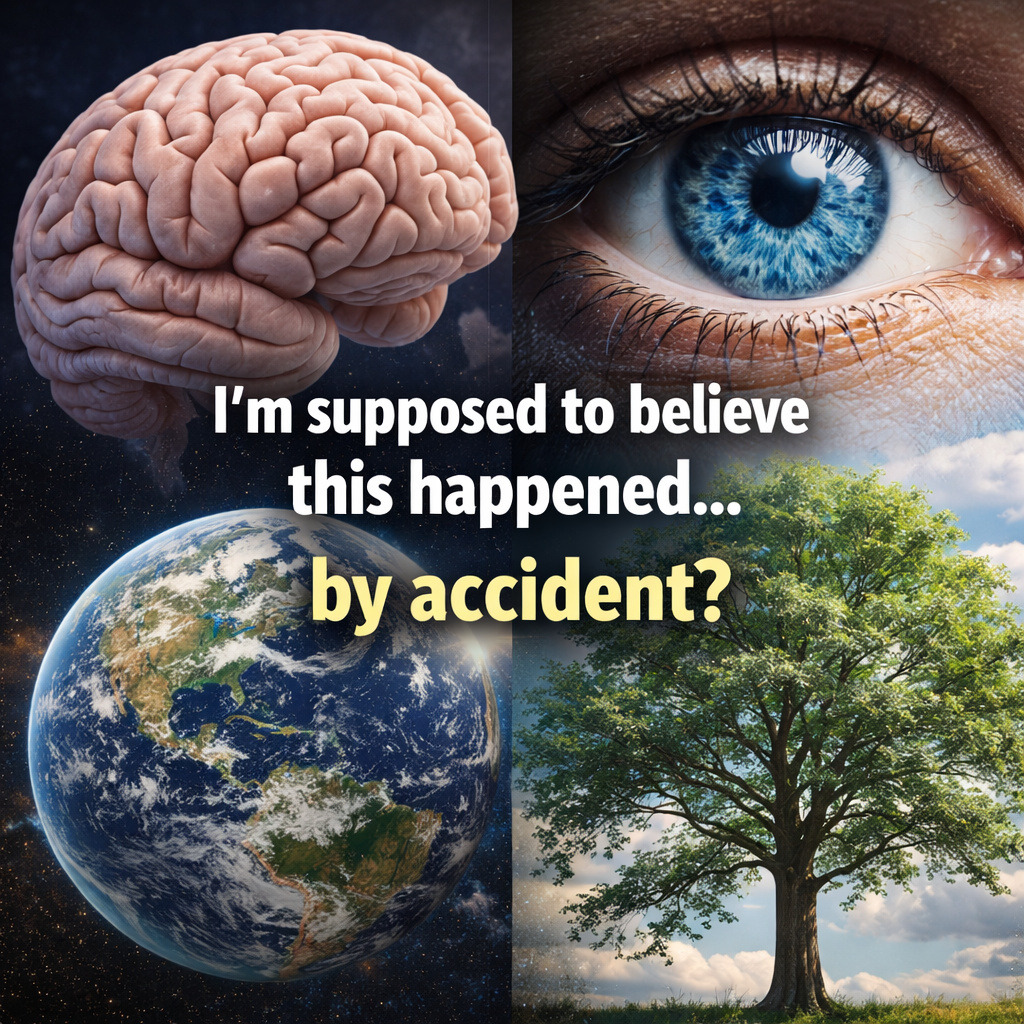
People love to say that believing in God is a leap of faith, like Christians are the ones choosing to ignore reality and just hope it all works out. But if we’re being honest, the bigger leap isn’t believing in God—it’s believing there isn’t one.
Because now you’ve got to explain everything.
Not just where you came from, but where everything came from. You’re looking at a world that runs with order, precision, and consistency, and you’re saying it all just happened… with no cause, no intelligence, no design behind it.
We’re told that everything came from nothing. And that sounds simple until you actually slow down and think about what “nothing” means. Nothing has no power. Nothing has no ability to create. Nothing doesn’t suddenly decide to become something. Yet somehow, we’re supposed to believe that nothing produced matter, energy, time, space, and eventually life.
That’s not the absence of faith. That’s faith in something that has never once been observed to happen.
Hebrews 3:4 says that every house is built by someone, but the builder of all things is God. And that just lines up with how we think about everything else in life. You don’t walk into a house and assume the wood randomly assembled itself. You don’t see a functioning system and assume there’s no mind behind it. But then we look at the universe—the most complex system we’ve ever encountered—and suddenly we’re supposed to believe it just came together on its own.
And it gets even harder to explain when you stop and look at yourself.
Your body isn’t just existing—it’s functioning in ways you don’t even think about. You get a cut, and your body immediately starts repairing itself. You don’t tell your cells what to do. You don’t manage the process. It just happens. Your heart beats without you thinking about it. Your lungs keep breathing while you sleep. You can form thoughts, speak words, recognize faces, feel emotions, and process information all at once.
And all of that is supposed to be the result of random mutations?
Psalm 139:14 says we are fearfully and wonderfully made, and that makes a whole lot more sense than the idea that we’re accidentally assembled. You don’t look at a machine with that level of complexity and say, “Yeah, that probably just built itself over time.” But somehow, that’s exactly what we’re told about the human body.
Then you step outside and look at the world you’re living in, and it only gets more precise. The Earth sits at exactly the right distance from the sun. If we were a little closer, we’d burn. A little farther, we’d freeze. Gravity holds everything in place, not too strong, not too weak. The atmosphere protects us from things that would kill us. The sun burns at the exact intensity needed to sustain life.
And then there’s something simple that most people overlook—you breathe out carbon dioxide, trees take it in, and they give you back oxygen. You depend on them, and they depend on you. That’s not chaos figuring itself out. That’s a system that works together.
Romans 1:20 says that God’s invisible attributes are clearly seen in what has been made. In other words, the evidence is right in front of us. It’s not hidden. It’s not complicated. It’s just often ignored.
So when people talk about faith, we need to be honest about what that really means. Everyone has it. The question isn’t whether you have faith—it’s where you place it. Because to believe there is no God, you have to believe that something came from nothing, that order came from chaos, that life came from non-life, and that everything meaningful came from something meaningless.
That’s not a lack of belief. That’s a belief system of its own. It just doesn’t like to call itself one.
But here’s where following Jesus is completely different, because it doesn’t stay in the realm of theory. It becomes personal. It becomes something you actually experience.
Jesus says in John 10:27 that His sheep hear His voice, that He knows them, and they follow Him. That’s not abstract. That’s relationship. That’s something that moves beyond just agreeing with an idea and into actually knowing Him.
At some point, it stops being “I believe” and becomes “I know.”
You start to see the way your life changes. The way your thinking shifts. The way conviction shows up where it never did before. The way forgiveness becomes real, not just a concept. The way direction and peace begin to replace confusion.
That’s not something you argue someone into. That’s something you experience.
First John talks about this idea of seeing, hearing, and touching—of knowing firsthand. That’s what it turns into. You’re not just repeating something you were told. You’re sharing something you’ve lived.
And that changes the conversation.
Because now it’s not about trying to win an argument. It’s not about proving a point. It’s simply saying, “I’ve seen it. I’ve experienced it. I know Him.”
So if someone wants to say believing in God takes faith, that’s fine. But let’s not pretend the alternative doesn’t. It takes far more faith to look at everything around you—and everything happening inside of you—and say this all just happened for no reason.
When you really look at it, the evidence doesn’t point to randomness. It points to design.
And design always points to a designer.
The real question isn’t whether God has made Himself known. It’s whether we’re willing to acknowledge what’s already right in front of us.
Discover more from Scott A Marshall
Subscribe to get the latest posts sent to your email.
