

The First “Christmas” Was Hard — And That’s Why It Still Matters
Every year we hear the same songs, see the same images, and watch the same movies that paint the birth of Jesus as gentle, peaceful, and warm. Over time, the story has been softened and romanticized until the manger looks more like a holiday decoration than an actual moment in history. But if we go back to the first century and examine what really happened, we see something very different. The first Christmas was not calm, polished, or comfortable. It was hard. It was raw. It happened in a world that looked a lot more like ours than we often want to admit.
When Jesus was born, Judea was under political oppression. Rome controlled everything. Caesar Augustus held absolute authority. Taxes were crushing. Morality was collapsing. Racial tension was everywhere. Religious leaders were corrupt. People were exhausted and discouraged. This wasn’t a hopeful world anticipating a Savior. It was a nation barely hanging on. And in the middle of all this chaos, Mary and Joseph were forced to travel because of a government census. She was at the end of her pregnancy, yet they had no choice. That road wasn’t smooth or safe. There was no comfort or privilege. There was certainly no sympathy. This isn’t the peaceful winter scene we put on Christmas cards. It was a time of stress, uncertainty, and fear.
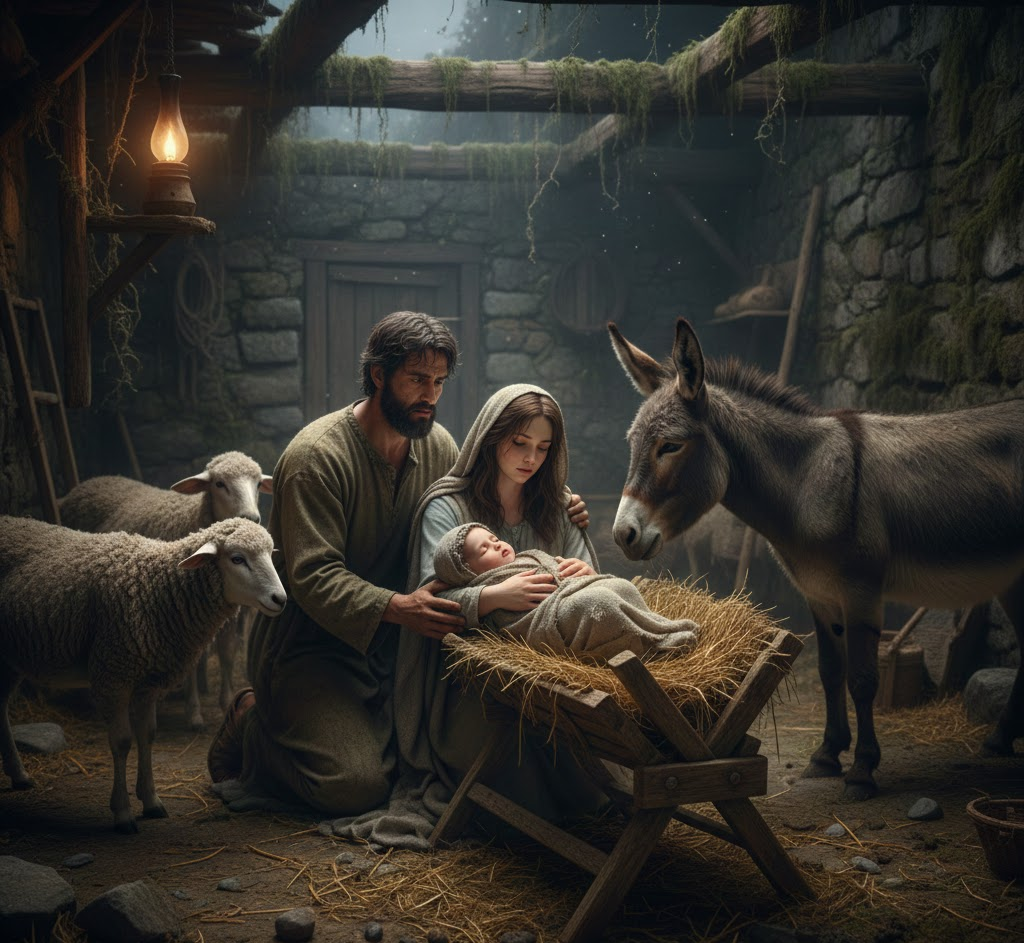
When Mary went into labor, they couldn’t find a place to stay. Not because people were rude—Bethlehem was overflowing with families who were also forced there by the census. So the Son of God was born in a place meant for animals. The manger wasn’t a decorative cradle. It was a feeding trough. The floor wasn’t freshly swept. The air smelled like livestock. The only witnesses were Mary, Joseph, and whatever animals happened to be nearby. No fanfare. No celebration. No headlines. And yet Galatians 4:4 reminds us that “when the fullness of time had come, God sent forth His Son.” This wasn’t a mistake or unfortunate timing. God chose this moment—in all its difficulty—for the arrival of the Savior.
Meanwhile, the world’s attention was fixed on Rome. Augustus was the most powerful man alive. Political decisions shaped nations. Armies enforced the will of the empire. History was unfolding on a grand scale. Who would care about a baby born in a place like that? God did. While leaders issued decrees and the world honored its emperors, Jesus arrived quietly. No crowds or thrones. No earthly glory. He came in a way the world would overlook—yet in a way that revealed the heart of God. Psalm 115:3 says, “Our God is in the heavens; He does whatever He pleases.” Rome didn’t control that night. God did.
This first Christmas still speaks to us today. We look at our world—political conflict, cultural division, economic pressure, moral confusion—and it feels overwhelming. But the birth of Jesus reminds us that God does His greatest work in the middle of chaos, not the absence of it. Jesus didn’t come into a world that was ready. He came into a world that was broken. That means your circumstances don’t disqualify God from working—they often prepare the ground for Him to move.
Christmas isn’t just about remembering what happened in Bethlehem; it’s about recognizing what God is doing in our own lives. With everything happening around you—the noise, the stress, the pressure—the real question is this: Will you still center your life on Christ even when everything around you feels unstable? The story of Jesus’ birth is not sentimental. It is powerful and gritty. It is real. And it reminds us of one unshakable truth: God is still sovereign. He is still faithful. And He still steps into the mess to redeem what we cannot fix.
Discover more from Scott A Marshall
Subscribe to get the latest posts sent to your email.
