

They Sacrificed for Scripture—We Scroll Past It
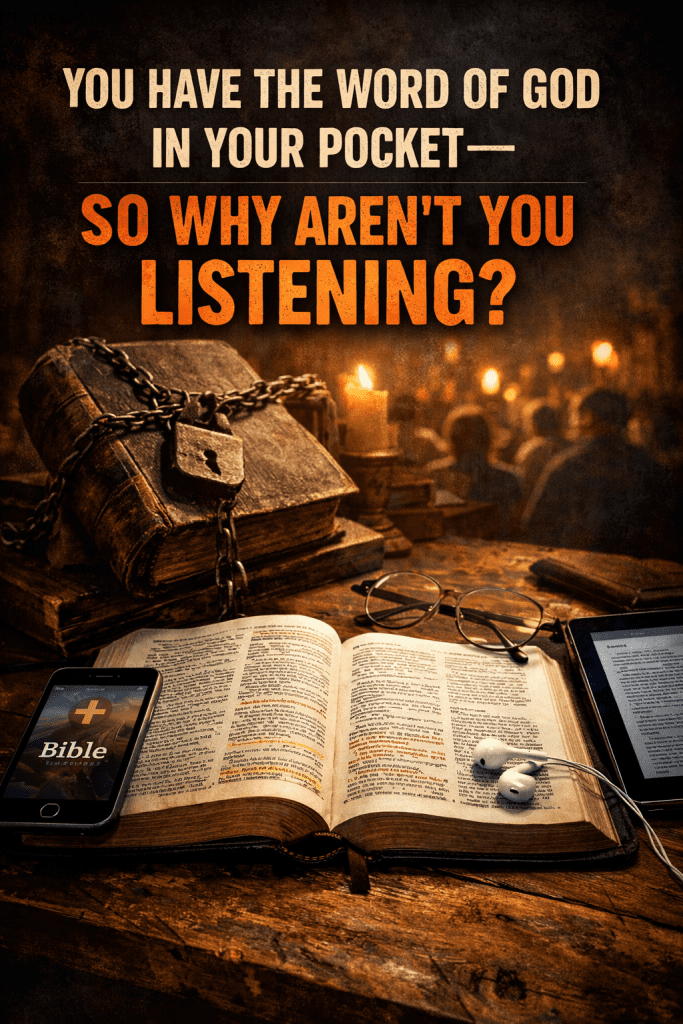
I came across a short reel the other day. Nothing elaborate, just a simple statement about how people used to value the Bible. It said that in the days of Wycliffe, people would sacrifice greatly just to get a few pages of Scripture, and those who couldn’t read would pay just to hear it read aloud for an hour.
Now I’ve heard things like that before, and honestly, I don’t just take those claims at face value. So I decided to look into it. And the more I dug into it, the more I realized something uncomfortable—it turns out, it was quite accurate. Not perfect in every detail, but accurate enough to expose a problem we don’t like to admit. We have no idea how precious the printed Bible really is.
If you’re not familiar with John Wycliffe, he lived in the 1300s and is often called the “morning star of the Reformation.” Long before the printing press existed, he pushed for the Bible to be translated into the common language so everyday people could actually understand it. That was a radical idea at the time, because Scripture was largely kept in Latin, and access to it was limited.
And here’s what that world looked like.
There were no mass-produced Bibles. Every copy had to be written by hand, which meant it took an incredible amount of time, skill, and resources. The materials were expensive, the labor was intense, and the result was something most people could never afford. A full Bible wasn’t just valuable—it was out of reach for the average person.
So what did people do when they couldn’t own one?
They listened.
They gathered anywhere they could to hear Scripture read aloud. They paid attention in a way we’ve largely lost. And yes, there are accounts of people making real sacrifices—trading goods, giving up what they had—just to obtain portions of Scripture or to hear it spoken. Whether every story gets repeated perfectly or not, the pattern is undeniable. People valued the Word of God enough to give something up for it.
Now compare that to where we are today.
You don’t just own a Bible. You probably own several. And even if you don’t, you have instant access to it on your phone, your computer, your tablet, and your car. You can listen to it, search it, compare translations, highlight it, and share it without ever turning a physical page. What once took years to produce is now available to you in seconds.
And yet somehow, with all of that access, we’ve become casual with it.
Let’s be honest about why that is. It’s not because we’re too busy. It’s not because we don’t understand it. It’s not because it’s hard to find. The truth is simpler and more direct than we’d like to admit—we don’t treat it as necessary.
You always make time for what you believe you need.
If your job depended on something, you’d prioritize it. If your health depended on something, you’d commit to it. But when it comes to the Word of God, we’ve convinced ourselves that it’s optional, that we can get to it when it’s convenient, or that a quick verse here and there is enough to sustain us.
But Scripture doesn’t present itself that way.
Second Timothy 3:16 tells us that all Scripture is breathed out by God. That means when you open your Bible, you are not just reading historical content or spiritual advice—you are engaging with the very words God has given. Hebrews 4:12 describes the Word as living and active, something that cuts through the surface and deals with the heart. Jesus Himself said in Matthew 4:4 that man does not live by bread alone, but by every word that comes from the mouth of God.
That is not the language of something optional.
That is the language of something essential.
The people in Wycliffe’s time didn’t treat Scripture like background noise because they couldn’t afford to. When you only had access to a few pages or a single reading, you listened differently. You remembered it. You held onto it. It wasn’t competing with everything else in your life because it was the most important thing in your life.
We, on the other hand, are surrounded by it and still manage to ignore it.
There are believers around the world right now who still don’t have what you have. Some risk their lives to gather and hear Scripture. Others memorize large portions of it because they may never have a physical copy. Meanwhile, we carry the entire Bible in our pocket and scroll past it without a second thought.
That’s not a technology problem. That’s a heart problem.
The issue isn’t access. The issue is value.
So the question isn’t whether you own a Bible. The question is whether you open it with the understanding of what it actually is. When you read it, are you approaching it like the words of God, or like another piece of content competing for your attention?
Because those are two very different things.
We don’t need another app, another translation, or another reminder that the Bible exists. What we need is a renewed understanding of what we’re holding. This is not just a book you read when you feel like it. This is the Word that corrects you, strengthens you, confronts you, and ultimately points you to Christ.
And if people once gave up real possessions just to hear a portion of it, then maybe the better question for us is this—what are we willing to give up in order to actually read it?
Discover more from Scott A Marshall
Subscribe to get the latest posts sent to your email.
